Permeable Paving Solutions for Irish Property Drainage
Complete guide to permeable paving in Ireland. Learn SuDS compliance, drainage solutions, planning requirements, material options, and flood prevention strategies.
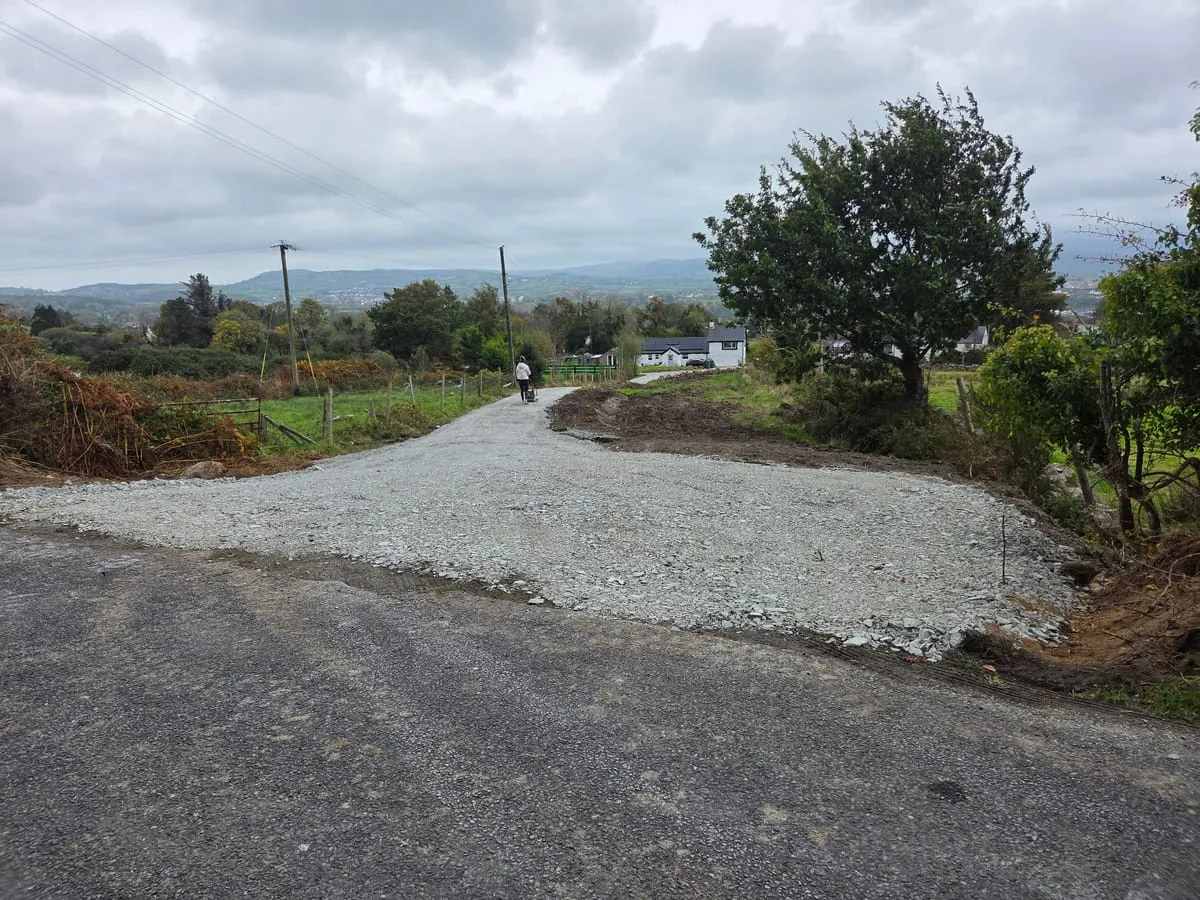
If you have ever watched water pool on your driveway in a downpour, or run off it straight onto the path and towards your front door, you already understand the problem permeable paving is meant to solve. Solid concrete and tarmac send every drop of rain somewhere else. Permeable surfaces let it soak away where it lands.
With the wet winters we get around Dundalk and the Louth coast, drainage is not a luxury. A driveway or patio that handles water well saves you grief, and it is increasingly what councils want to see on new work too. Here is a plain look at the options.
What permeable paving actually does
Standard paving is sealed, so rain has nowhere to go but across the surface and into the nearest gully or drain. In heavy rain those drains can be overwhelmed, and the water backs up or floods.
Permeable paving is designed so water passes down through it into a stone layer underneath, where it can soak into the ground or drain away slowly. That means:
- Less surface water sitting on your driveway or patio.
- Less runoff onto paths, into your house, or onto a neighbour’s property.
- Less strain on local drains during storms.
It is part of what is called Sustainable Drainage, or SuDS, which is about managing rainwater closer to where it falls rather than piping it all away at once.
A note on planning
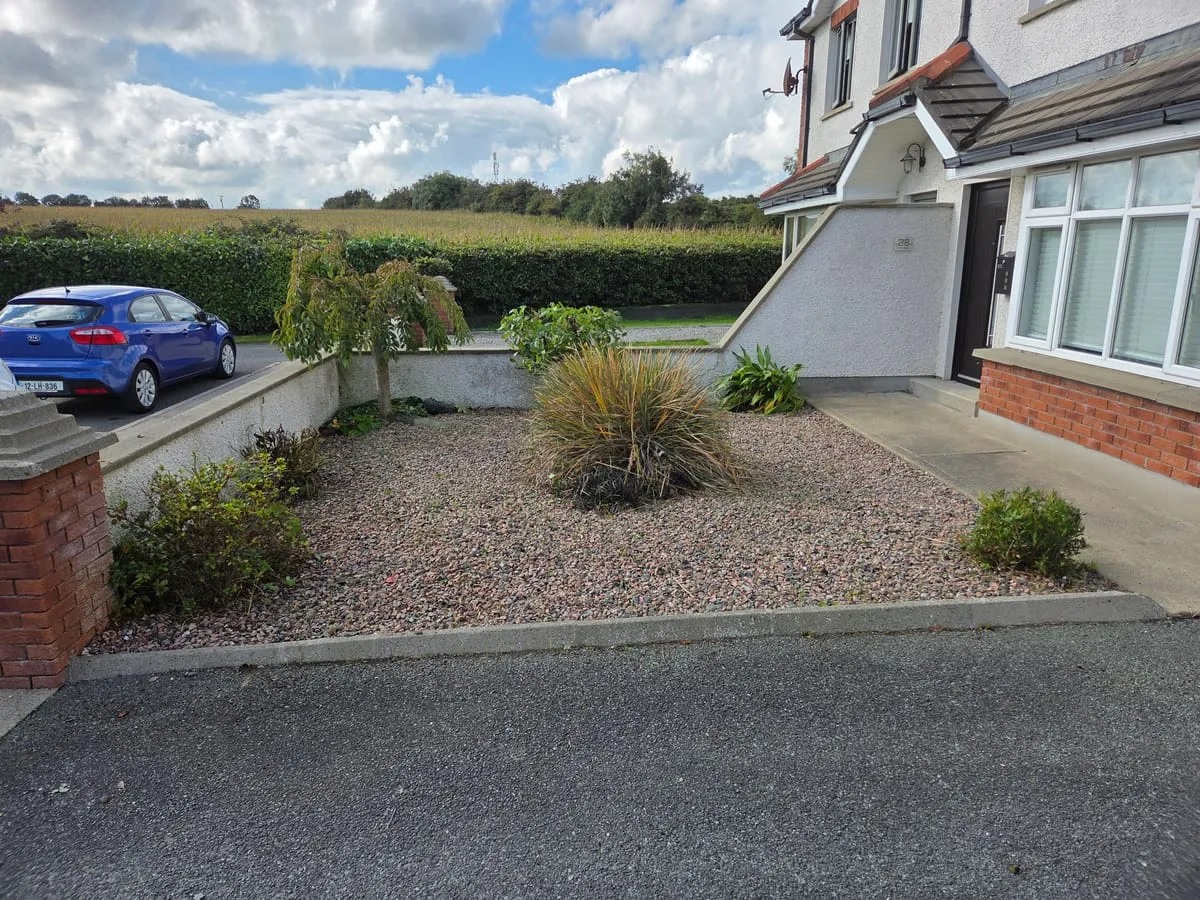
For larger jobs and new builds, councils now look closely at how a site handles surface water, and SuDS-style drainage is increasingly expected. If you are paving a big area or doing a full driveway, it is worth checking with Louth County Council on whether your project needs planning permission. Rules vary by size and location, so confirm before you commit rather than assume.
For a modest patio or a small area, this is usually less of an issue, but good drainage is still worth designing in from the start.
Material options
Permeable block paving
This uses paving blocks laid with small gaps between them, filled with grit, so water drains down through the joints. It looks much like normal block paving but handles water far better. It suits driveways and patios and comes in plenty of finishes.
Porous concrete and asphalt
These are specially mixed so the surface itself is full of tiny gaps that let water through. They give a smooth, continuous finish, which works well for driveways. They need to be laid properly on the right base, so this is a job for someone who knows the system.
Gravel and resin-bound surfaces
Loose gravel is the simplest permeable surface of all and drains freely, though it scatters and needs topping up. Resin-bound gravel binds the stones into a firm, smooth surface that still lets water through. It is a tidy middle ground for paths and driveways.
Natural stone with open joints
If you want a more traditional look, natural stone laid with wider, permeable joints lets water soak away while keeping a classic finish. The joints need the right filling so they drain without weeds taking hold.
The base is what matters most
Whatever surface you choose, the layer underneath does the real work. A permeable surface only drains well if it sits on an open stone base that water can pass into and move through.
A few things to get right:
- Use clean, open-graded stone for the base so water moves freely instead of clogging.
- Account for clay soil. A lot of ground around Louth is heavy clay that drains slowly, so the base may need to be deeper, or an outlet added so water does not just sit there.
- Plan for overflow in the worst storms, with somewhere safe for excess water to go.
This is why a permeable driveway is more than just laying nice blocks on top. If the base is wrong, the surface will not drain no matter how good the paving looks.
Keeping it draining
Permeable paving needs a bit of upkeep to keep working:
- Keep the surface clear of leaves, moss and silt, which can clog the joints or pores over time.
- Brush and clean it now and then so the gaps stay open. A gentle wash is fine; very high-pressure blasting can damage some surfaces.
- Watch problem spots. If water starts pooling where it used to drain, the surface is likely clogged and needs cleaning.
Done well and kept clear, a permeable surface should serve you for years.
Talk to us about your drainage
We work on driveways, kerbs, paths and the drainage around them across Dundalk, the Cooley peninsula and the wider Louth area. If water is pooling where it should not, or you are planning a new driveway or patio and want it to handle our weather, we can help you get it right from the base up.
Call Seamus on 085 168 5170 or request a free quote at /#quote. You can also see more of what we do on our garden maintenance services page.
For more on coping with our changeable weather, have a look at our summer drought lawn care strategies.