Irish Lawn Fertilization Calendar: Year-Round Feeding Schedule
Complete fertilization schedule for Irish lawns. Learn exactly when and how to feed your grass for thick, healthy growth that survives our unpredictable climate.
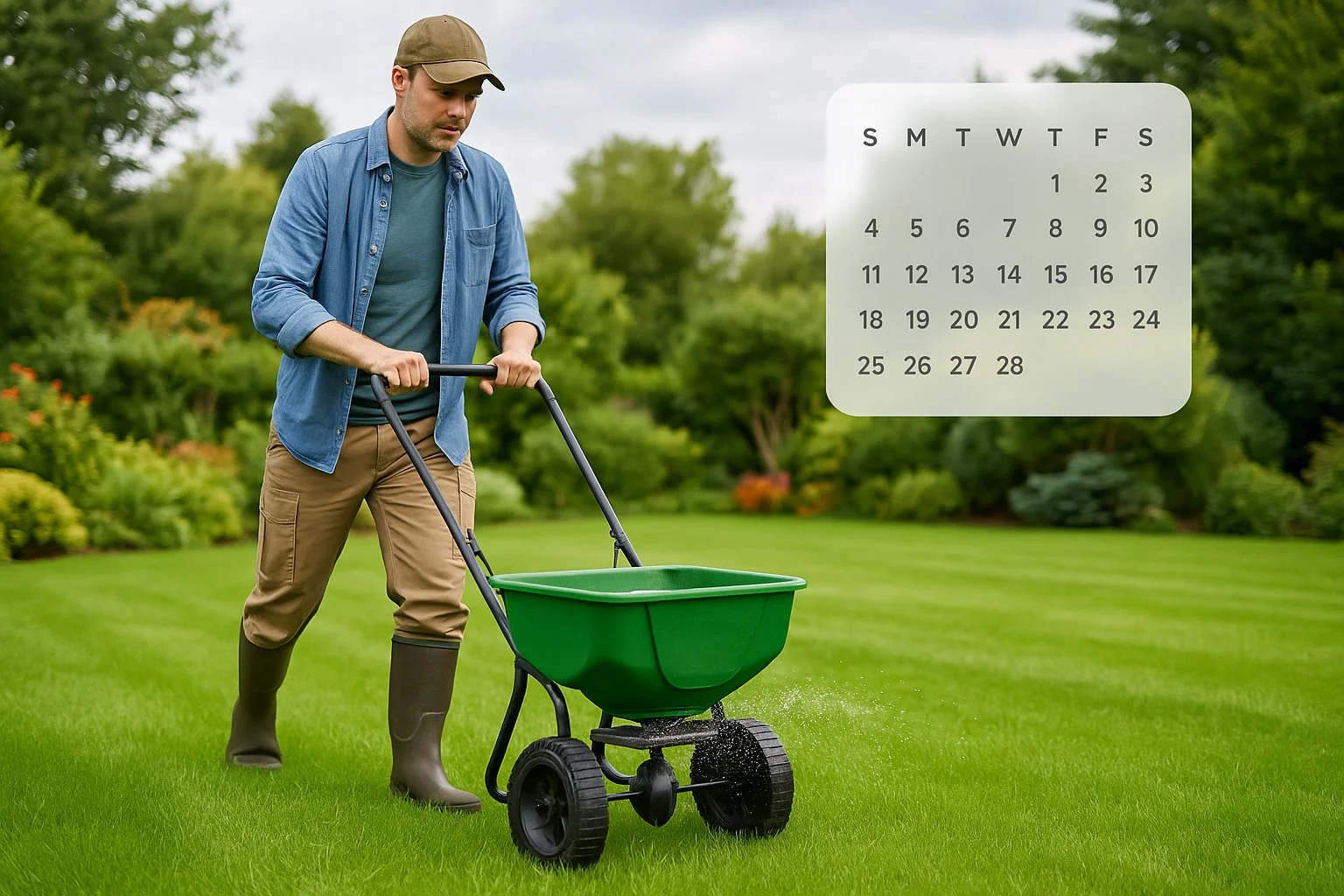
Stop guessing when to feed your lawn. Seriously. Irish weather’s unpredictable enough without you throwing fertilizer around willy-nilly and hoping for the best. Get the timing wrong and you’re either wasting money or actually damaging your grass.
Here’s what most people don’t realize: Irish lawns need completely different feeding schedules than the advice you’ll find online from American or even British sources. Our climate’s unique—mild, wet, and with growing seasons that start and stop whenever they feel like it.
Understanding Irish Soil Conditions
Before we get into feeding schedules, you need to understand what you’re working with. Irish soil isn’t like soil anywhere else, and that affects everything about how you should fertilize.
Common Nutrient Deficiencies
Most Irish soils are naturally acidic. We’re talking pH levels between 4.5 and 6.0 in many areas, when grass prefers something closer to 6.5-7.0. This acidity locks up nutrients, making them unavailable to grass even when they’re present in the soil.
Phosphorus deficiency is massive in Irish soils. All that rain washes phosphorus deeper than grass roots can reach, leaving your lawn unable to develop strong root systems. You’ll see this as slow establishment, poor drought tolerance, and grass that just never seems to thicken up properly.
Potassium’s another problem. Irish grass faces constant stress from our wet-dry cycles, temperature swings, and general weather madness. Without adequate potassium, your lawn can’t handle this stress and becomes vulnerable to disease and winter damage.
pH Levels in County Louth
County Louth soils vary wildly depending on location. Coastal areas often have more neutral pH due to shell content and sea spray, while inland areas can be properly acidic—especially around boggy or forested areas.
Test your soil properly. Don’t just test one spot and assume the whole garden’s the same. Take samples from different areas and test them separately. You might find your front garden needs lime while your back garden doesn’t.
If your pH is below 6.0, lime application should come before any fertilizing program. There’s no point feeding grass that can’t access nutrients due to soil acidity.
Seasonal Fertilization Schedule
Right, here’s the actual schedule. But remember—this is a guide, not gospel. Irish weather changes the rules every year, so you need to adapt based on what’s actually happening outside.
Spring Feeding (March-May)
Don’t rush spring feeding. I know you’re desperate to get started, but feeding too early just wastes fertilizer and can actually stress grass that’s not ready for it.
Wait until soil temperatures hit 8°C consistently. This usually happens mid-to-late March in County Louth, but some years it’s early April. Let the grass tell you it’s ready—you want to see active growth before you start feeding.
Use a balanced fertilizer with slightly higher nitrogen—something like 12-6-6 NPK ratio works well for spring. This gives grass the nitrogen boost it needs for leaf growth while providing phosphorus for root development and potassium for stress tolerance.
Apply 25-30g per square meter. Any more and you risk burning grass or encouraging soft growth that’s vulnerable to disease. Spring grass is tender—treat it gently.
Summer Maintenance (June-August)
Summer feeding in Ireland is tricky because our summers are unpredictable. Some years you get drought conditions, other years it rains constantly. Your fertilizing strategy needs to adapt.
Switch to a lower nitrogen feed—around 8-4-8 NPK works well. You want to maintain grass health without pushing rapid growth during potentially stressful conditions. Too much nitrogen during hot, dry spells can actually damage grass.
If we get one of those rare proper dry summers, stop feeding until rain returns. Fertilizer during drought is like giving energy drinks to someone who’s already dehydrated—it makes problems worse, not better.
For typical Irish summers (mild and damp), feed every 6-8 weeks through June and July. Skip August feeding if temperatures are consistently above 25°C or if drought conditions develop.
Autumn Preparation (September-November)
This is your most important feeding of the year. Autumn feeding determines how well your grass survives winter and how quickly it recovers in spring.
Switch to autumn-specific fertilizer with higher potassium content—something like 6-3-12 NPK. The high potassium helps grass cells store energy and resist frost damage. Lower nitrogen prevents soft growth that won’t survive winter.
Apply autumn feed between mid-September and mid-October. Earlier application gives grass time to absorb nutrients before winter dormancy. Later application can encourage late growth that gets hammered by frost.
This is also your best time for lime application if soil tests show you need it. Lime works slowly, so autumn application gives it months to adjust soil pH before the next growing season.
Winter Considerations (December-February)
Don’t feed during winter. Seriously. Grass isn’t growing, so fertilizer just sits there or washes away. You’re wasting money and potentially polluting watercourses.
Exception: if you’re dealing with moss problems, iron sulfate application during winter can help. But this isn’t feeding—it’s moss control that happens to give grass a slight iron boost.
Use winter months for planning and soil testing. Get samples analyzed so you know exactly what your lawn needs when spring arrives.
Choosing the Right Fertilizer
The fertilizer aisle at the garden centre can be overwhelming. Here’s how to choose what actually works for Irish conditions.
Organic vs Synthetic Options
Organic fertilizers work brilliantly in Irish conditions. They release nutrients slowly, reducing waste through our frequent rain. They also improve soil structure over time, helping with drainage and nutrient retention.
Pelleted chicken manure is excellent for Irish lawns—cheap, effective, and almost impossible to overdose. Apply it at 50-70g per square meter in spring and autumn. The slow release matches grass growth patterns perfectly.
Synthetic fertilizers give faster results but require more careful application. They’re brilliant for quick fixes but can easily burn grass if you get timing or weather wrong. Use them when you need rapid response, organic for long-term health.
Blood, fish, and bone meal works well too, but timing matters. Apply it when soil’s warming up but not during hot spells. The high nitrogen content can cause problems in drought conditions.
Slow-release vs Quick-release
Slow-release fertilizers are generally better for Irish conditions. Our unpredictable weather means you need consistent nutrient supply rather than quick bursts that might coincide with stress periods.
Coated urea fertilizers release nutrients based on soil temperature and moisture—perfect for Irish conditions. As soil warms up, more nutrients become available, matching natural grass growth patterns.
Quick-release fertilizers have their place for specific problems—patching bare areas, correcting deficiencies, or pushing growth during ideal conditions. But they shouldn’t be your main feeding strategy.
Application Techniques
Getting fertilizer onto your lawn properly makes a huge difference to results. Poor application wastes money and can damage grass.
Spreader Calibration
Broadcast spreaders give more even coverage than drop spreaders for lawn fertilizer. But you must calibrate them properly—different fertilizers flow differently, and manufacturer settings are often wrong.
Test your spreader on concrete first. Mark out a square meter, set the recommended rate, and see how much fertilizer actually comes out. Adjust the setting until you get the right amount per square meter.
Walk at steady pace and overlap passes slightly. Missed strips show up as yellow lines within weeks, while overlapped areas can burn from double-dosing.
Weather Timing Considerations
Never apply fertilizer before heavy rain. You’ll just wash expensive nutrients straight into drains. Light rain or irrigation within 24 hours is ideal—enough to dissolve granules but not enough to cause runoff.
Avoid application during drought conditions unless you can water immediately afterward. Granular fertilizer sitting on dry soil can actually draw moisture from grass, causing burn damage.
Early morning application works best. Dew helps dissolve granules, and you’ve got the whole day for nutrients to start working before evening temperatures drop.
Professional Fertilization Programs
Sometimes DIY isn’t the answer, especially if you’re dealing with problem lawns or complex soil issues.
Soil Testing Services
Professional soil tests cost €30-50 but give detailed nutrient analysis, pH readings, and specific recommendations for your soil type. Much more useful than cheap DIY test kits that only give rough pH estimates.
Professional fertilization programs include soil testing as standard, then create custom feeding schedules based on actual soil conditions rather than generic recommendations.
They also monitor grass response and adjust programs accordingly. If your lawn isn’t responding as expected, they can modify nutrient ratios or timing to get better results.
Custom Feeding Schedules
Professional programs adapt to Irish weather conditions automatically. They monitor soil temperatures, rainfall, and grass growth rates to time applications perfectly.
This flexibility is worth paying for if you’ve struggled with DIY feeding. Getting timing wrong wastes money and can damage grass—professional timing usually pays for itself through better results and fewer problems.
The key to successful lawn fertilization in Ireland is understanding that our climate doesn’t follow textbook rules. Work with Irish conditions rather than fighting them, and your grass will reward you with thick, healthy growth that survives whatever weather we throw at it.
Focus on spring fertilization strategies that match soil warming patterns, and remember that feeding for disease resistance is as important as feeding for growth in our humid climate.
Most importantly, don’t overdo it. Irish grass is adapted to relatively low-nutrient conditions. Gentle, consistent feeding works far better than aggressive programs that might suit Mediterranean climates but stress Irish lawns.