Robotic vs Traditional Mowing in County Louth: Complete Comparison
Thinking about a robotic mower for your County Louth garden? We break down costs, performance in Irish weather, and whether robot mowers actually work in our climate.
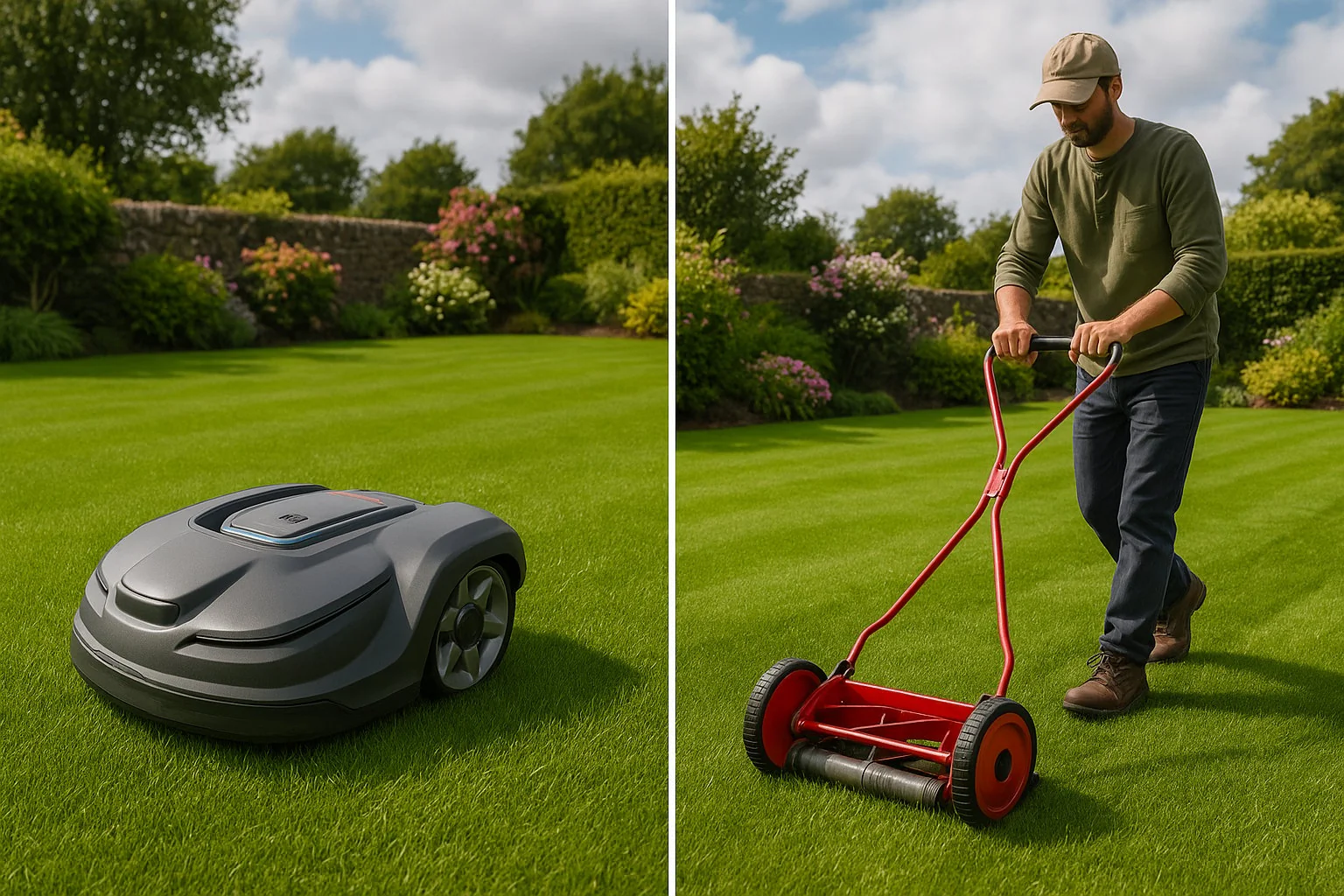
Right. You’ve seen them in the ads—those fancy robot mowers gliding around pristine lawns while their owners sip tea on the patio. Looks brilliant, doesn’t it? But here’s what you’re really wondering: do these things actually work in County Louth, or are they just expensive toys that’ll spend half their time stuck in the shed?
Fair question. Ireland’s weather isn’t exactly what you’d call “robot-friendly,” and let’s be honest, if you’re going to drop serious money on something, you want to know it’ll actually do the job. So let’s dig into the real story—the good, the bad, and the “wish I’d known that before I bought it.”
Robotic Mower Technology Overview
These aren’t just remote control toys with blades stuck on them. Modern robotic mowers are properly clever bits of kit that can handle way more than you’d expect.
How Robotic Mowers Work
Here’s the clever bit: they learn your garden. You install a boundary wire around the edges (bit like an invisible dog fence), and the robot maps out your lawn over the first few weeks. It figures out the best cutting patterns, where the tricky bits are, and even learns to avoid your prize roses.
Most robots cut little and often—we’re talking tiny grass clippings every day or two rather than big weekly chops. This actually works brilliantly for grass health because the clippings are so small they just disappear back into the lawn as natural fertilizer.
They’re surprisingly smart about weather too. Rain sensors tell them to head home when it gets wet, and most models can sense when the grass is too damp to cut properly. No more wrestling with a petrol mower in drizzle wondering if you’re doing more harm than good.
Available Models for Irish Market
You’ve got three main players worth considering: Husqvarna, Worx, and Robomow. Prices start around €800 for basic models that’ll handle small gardens, going up to €3,000+ for the fancy ones with GPS and smartphone apps.
For most County Louth gardens, something in the €1,200-1,800 range does the job nicely. These models handle lawns up to about 1,000 square meters and cope well with our typical Irish slopes and awkward corners.
Cost Analysis Breakdown
Let’s talk money. Because that’s what everyone wants to know, isn’t it?
Initial Investment Comparison
A decent robotic mower for an average Irish garden costs €1,200-1,800. Professional installation adds another €200-300 if you don’t fancy spending a weekend laying boundary wire. So you’re looking at around €2,000 all in.
Compare that to a quality petrol mower at €400-800, or hiring professional mowing services at roughly €30-50 per cut. On paper, the robot pays for itself in 2-3 years if you’re currently paying for professional cuts.
But here’s where it gets interesting. Factor in your time, and the numbers change completely. How much is your Saturday morning worth? If you’re currently spending 2-3 hours a week on lawn care, that robot starts looking like bargain pretty quickly.
Long-term Operating Costs
Robots are cheap to run. We’re talking about €20-30 per year in electricity—less than what you’d spend on petrol for a traditional mower in a month. No oil changes, no spark plugs, no trips to the garden centre for fuel.
But they do need maintenance. Blades last 2-3 months and cost about €15-20 to replace. Batteries eventually die (usually after 3-4 years) and replacement costs €150-200. Still way cheaper than petrol and servicing though.
Professional Installation Costs
Most people can install these themselves if they’re handy with basic tools. The boundary wire just pegs into the ground, and the charging station plugs into any outdoor socket. Weekend job for most folk.
But if you’ve got a complex garden with multiple levels, flower beds everywhere, or you’re just not confident with the tech side, professional installation makes sense. €200-300 gets you proper setup, boundary wire buried properly, and someone to show you how everything works.
Performance in Irish Conditions
This is where things get real. Ireland throws everything at your garden equipment, so how do these robots actually cope?
Weather Resistance Capabilities
Modern robotic mowers are built for this. IPX4 or IPX5 ratings mean they handle our typical drizzle without problems. They’re not submarines, but they won’t die if caught in a shower.
The clever bit is they know when to quit. Rain sensors send them scurrying back to base before conditions get too rough. No more of that “I’ll just finish this bit” mentality that has you mowing in a downpour because you started the job.
Cold isn’t usually an issue either. Most models work fine down to about 5°C, which covers our growing season nicely. They automatically go into winter storage mode when temperatures drop consistently.
Handling Wet Grass Conditions
Here’s where Irish gardens get tricky. We don’t get neat dry spells followed by rain—we get this constant damp that makes traditional mowing a nightmare. Robots handle this way better than you’d expect.
Because they cut little and often, they’re not trying to hack through wet, overgrown grass. Small, frequent cuts mean the robot rarely encounters conditions that would bog down a traditional mower.
That said, they’re not magic. Really soggy ground still causes problems—wheel slip, poor cutting, potential damage to the lawn. But on balance, they cope with our damp conditions far better than dragging a heavy petrol mower across soggy grass.
Traditional Mowing Advantages
Before you rush off to buy a robot, let’s be fair about where traditional mowing still wins.
Professional Expertise Benefits
There’s something to be said for human judgment. A good gardener spots problems early—disease patches, pest damage, areas that need special attention. Professional expertise means someone’s actually looking at your lawn, not just cutting it.
Robots cut everything the same way. They don’t adjust for different grass types, they don’t notice if one area’s struggling, and they certainly don’t spot early signs of problems that need attention.
Plus, professional services often include edge trimming, debris removal, and general garden tidying that robots simply can’t do. You’re getting lawn care, not just grass cutting.
Seasonal Flexibility
Traditional mowing adapts to conditions. Heavy spring growth gets a longer, slower cut. Autumn leaves get cleared as part of the job. Awkward weather means adjusting the schedule to suit conditions.
Robots stick to their programming. They’re brilliant at routine maintenance but can’t adapt to unusual situations. When Storm Whatever-It’s-Called hits and your garden’s covered in branches and debris, the robot just sits there waiting for you to clear up.
Which Option Suits County Louth Properties
Right, decision time. What actually works best for gardens around here?
Property Size Considerations
Small to medium gardens (up to 1,000 square meters) are perfect for robots. They handle the routine cutting beautifully, keeping grass at perfect height without you lifting a finger. Gardens this size also mean the boundary wire installation isn’t too much of a faff.
Larger properties get expensive quickly. You need higher-spec robots, more complex installations, and possibly multiple charging stations. At that point, commercial lawn care services often make more financial sense.
Really small gardens (under 200 square meters) might not justify the cost. A decent electric mower and 30 minutes every couple of weeks probably makes more sense than a €1,500 robot.
Terrain Suitability Assessment
Robots love flat, open lawns. They cope with gentle slopes (up to about 30% gradient), but steep banks or terraced gardens cause problems. Complex shapes with lots of narrow passages and tight corners also challenge most models.
If your garden’s basically a bowling green with a few flower beds, a robot’s perfect. If it looks like something from a garden design magazine with multiple levels and complicated landscaping, stick with traditional cutting or professional services.
Coastal properties around Blackrock or Carlingford need to consider salt air exposure too. While robots are weather-resistant, constant salt exposure can cause premature corrosion of metal parts.
The honest answer? For most typical County Louth suburban gardens, robotic mowers work brilliantly. They handle our weather better than expected, save massive amounts of time, and keep lawns looking consistently good.
But they’re not magic solutions. You still need to maintain the garden around them, deal with edges and awkward spots, and provide winter storage. Think of them as very capable assistants rather than complete replacements for all lawn care.
If you’re currently doing your own mowing and value your weekend time, a robot’s a game-changer. If you’re used to comprehensive professional services that handle all aspects of garden maintenance, you might miss the human touch and attention to detail.
The technology’s definitely ready for Irish conditions—the question is whether it fits your specific garden and lifestyle. But for busy homeowners who just want a consistently well-maintained lawn without the weekly faff, these robots are pretty impressive bits of kit.