Preventing Lawn Diseases in Ireland's Humid Climate
Stop lawn diseases before they start with this Irish prevention guide. Learn to spot red thread, dollar spot and fairy rings, and how to keep your grass healthy.
Patchy, discoloured areas that appear out of nowhere and spread are usually a sign of lawn disease, and our mild, damp Irish climate is ideal for the fungi that cause it. The good news is that most common lawn diseases here are preventable with good basic care. You can’t eliminate the risk entirely, but you can make your lawn far less likely to suffer.
The diseases you’re most likely to see
Red thread
Red thread is the most common lawn disease in Ireland. Look for circular patches of bleached, straw-coloured grass with fine red or pink threads woven through the dead blades. Those threads are the fungus itself and are the clearest sign it’s red thread rather than something else.
It thrives in our mild, damp spells in spring and autumn, and it mainly attacks grass that’s short of nitrogen. The best defence is keeping the grass adequately fed so it stays strong. A sensible feeding schedule goes a long way here.
Dollar spot
Dollar spot shows as small, round, coin-sized patches that can merge into larger irregular areas. Early in the morning, when the dew is heavy, you may see a fine, cobwebby fungal growth on the affected grass that vanishes once the dew dries, so check early if you suspect it. It’s encouraged by low soil nitrogen, high humidity and still air, so sheltered corners and spots under trees are most at risk.
Fairy rings
Fairy rings appear as dark green circles or arcs, sometimes with mushrooms around the edge. The grass inside the ring may be lush, thin or dead depending on the fungus. They’re hard to treat because the fungus lives deep in the soil, so the focus is on good drainage and not letting too much old organic matter build up in the lawn.
Prevention starts with the conditions
The best disease control is making it hard for disease to get going in the first place. With Irish weather, that mostly means managing moisture and air.
Improve air movement
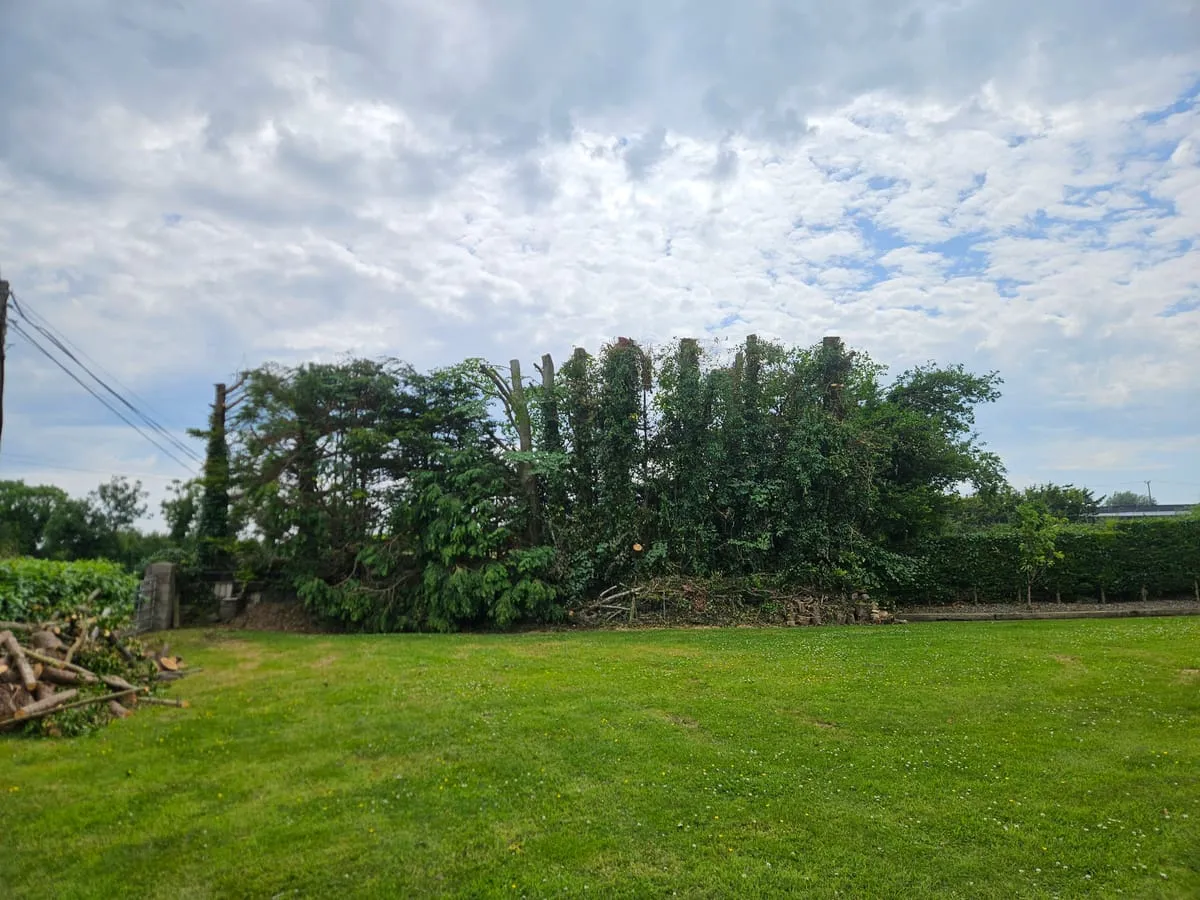
Fungi love still, humid air where moisture lingers. Trim back overhanging branches that block the breeze and create damp pockets. Solid fencing and dense planting can leave wind shadows where the air barely moves, so open things up where you can.
Manage moisture
- Water deeply but less often. This encourages deep roots and lets the surface dry out between waterings. Daily light sprinkling keeps the surface damp, which is exactly what disease wants. Watering is rarely needed here anyway given our rainfall.
- Water in the morning if you do water, so the grass dries through the day rather than sitting wet overnight.
- Fix soggy areas. Standing water and constantly wet soil are perfect for disease. Improving drainage or soil structure in problem spots makes a real difference.
Feed for resistance, not just growth
Well-fed grass shrugs off disease far better than hungry, stressed grass, but balance matters.
- Keep nitrogen steady through the growing season rather than dumping a big dose then leaving it short. Consistent, moderate feeding keeps the grass resilient.
- Don’t overdo spring nitrogen. Too much pushes soft, lush growth that’s easily invaded by fungi.
- Use a higher-potassium autumn feed. Potassium toughens the grass and helps it through the cold, damp months when many diseases are active.
Day-to-day habits that help
Small routine changes cut disease pressure a lot.
- Don’t cut too short. Keep the grass at a sensible height (around 5 to 7cm) during the damp spring and autumn months so it stays vigorous.
- Keep mower blades sharp. Blunt blades tear the grass and leave ragged wounds that disease gets into. Sharpen at least once a year.
- Never mow wet grass. It spreads spores on the blades and wheels, and gives a poor cut. Wait until it’s dry.
The realistic view
In Ireland, lawn disease is part of the territory. Our climate will always suit fungi, so the aim isn’t to wipe out all risk but to keep your grass healthy enough to resist and recover. Good nutrition, sensible watering and correct mowing do more for long-term disease control than reaching for chemicals.
If you’ve a persistent problem, or you’d rather hand the regular care over, we keep lawns healthy across Dundalk and the wider Louth and Cooley area. Call 085 168 5170 or request a free quote.